
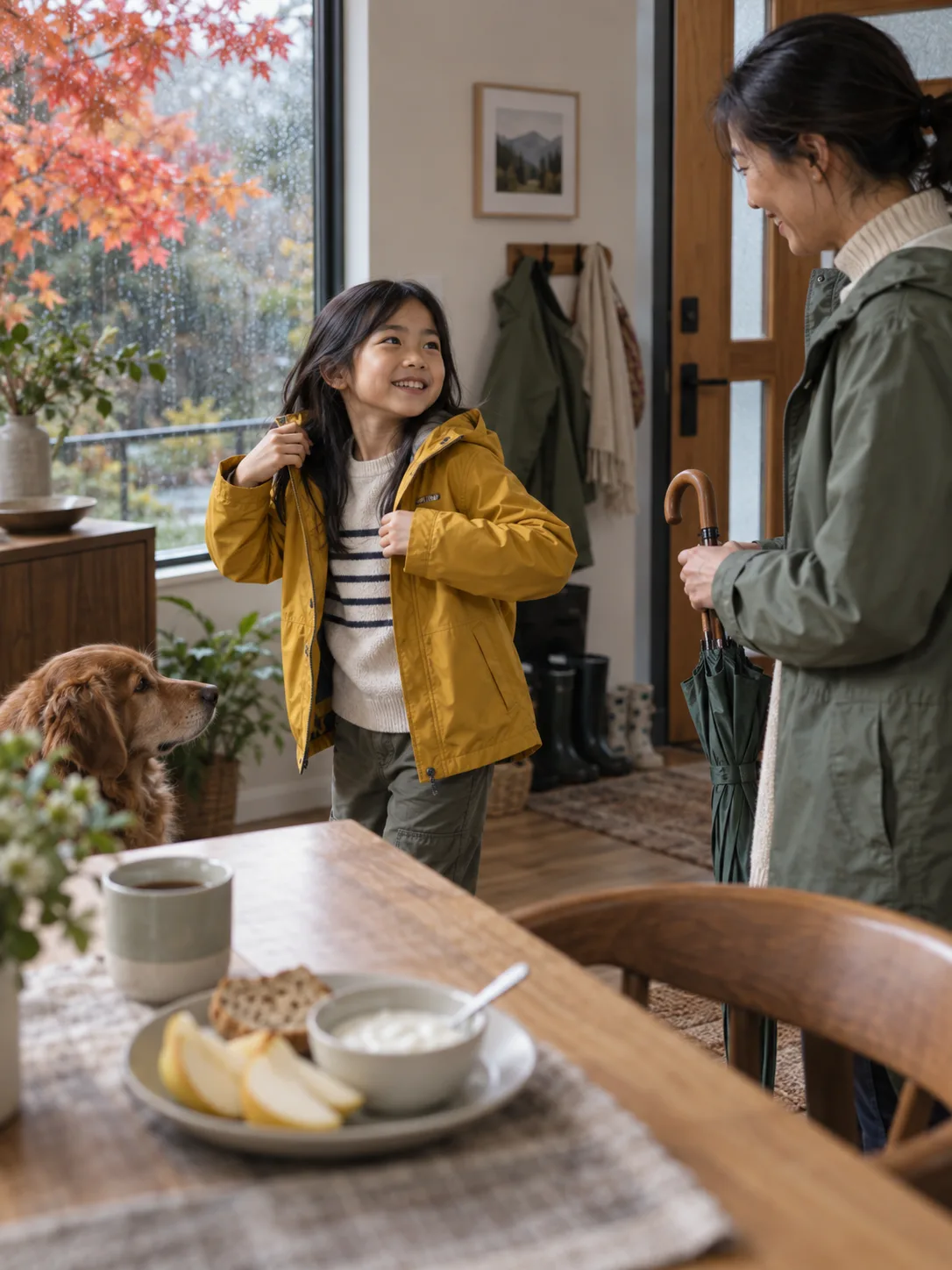
Once autumn arrives in Greater Vancouver, mornings are darker, the light fades soon after school, and rain regularly interrupts outdoor plans. The most common problems are often concrete rather than mysterious: later bedtimes, difficult mornings, afternoon grazing and very little movement after school.
Instead of reaching immediately for a product that claims to “boost immunity,” begin with three foundations: sleep, movement and regular meals.
Keep wake-up time consistent
Children aged 5–13 generally need 9–11 hours of sleep, while teenagers aged 14–17 generally need 8–10 hours. Individual needs vary, but persistent difficulty waking, daytime sleepiness, mood changes or reduced attention at school are good reasons to review the routine.
Begin with a fairly consistent wake-up time and work backward to set bedtime. Dim lights and lower stimulation during the last hour before bed. Charge devices outside the bedroom and repeat a short sequence such as washing up, preparing the school bag and reading.
Persistent loud snoring, pauses in breathing, morning headaches or unusual sleepiness despite adequate time in bed should be discussed with a family doctor rather than dismissed as seasonal tiredness.
Keep moving on rainy days
Canadian public-health guidance recommends that children and youth aged 5–17 accumulate at least 60 minutes of moderate-to-vigorous activity each day, with muscle- and bone-strengthening activity several times a week. During the rainy season, movement can be divided across walking part of the school route, active recess and a short session at home or in a community centre.
A rain jacket and shoes with good traction are more useful than heavy, non-breathable layers. Change wet socks and clothing after coming home. Reflective details help in low light, and children should lower umbrellas and look up before crossing a road.
Activity is not a way to “sweat out a cold.” A child with fever, significant wheezing, chest pain or poor responsiveness needs rest and appropriate medical assessment.
A simple after-school snack
Fruit with plain yogurt, whole-grain toast with egg, vegetables with hummus, or a small bowl of warm oatmeal provide steadier energy than relying on sugary drinks and snack foods. Children with food allergies should follow the safety plan developed with their school and medical team.
Familiar foods can be prepared warmly in cooler weather: vegetable and egg soup, tofu and fish soup, roasted squash, whole grains or lightly sweetened oatmeal. Warmth is a seasonal preference, not proof that one food prevents colds.
Children do not need to be forced to eat the “most nourishing” food. Helping choose one vegetable, wash fruit or arrange a plate can build longer-term habits more effectively than pressure at the table.
Herbs and the Energy Pod: safety first
Natural does not automatically mean safe for children. Health Canada advises consulting a health professional before giving a natural health product to a child and choosing products with appropriate authorization. A child’s dose is not simply a smaller adult dose, and long-term use of an online herbal recipe is not appropriate.
Sky can discuss routine, food and TCM wellness ideas after an individual assessment. When herbs are being considered, age, weight, allergies, medications and the reason for use all matter.
The Energy Activation Pod is not presented as a routine children’s wellness service, a way to “sweat out” illness, or a substitute for pediatric care. A child should not use it without a clear manufacturer age indication and professional assessment, or while experiencing fever, infection, dehydration or altered skin sensation.
Common questions
Do children need supplements every autumn?
Not simply because the season changed. Stabilize sleep, activity, meals and existing health care first. Use supplements when there is a clear reason and qualified guidance.
Does frequent runny nose always mean a “cold constitution”?
No. Infection, allergy and environmental irritation can all cause a runny nose. Persistent or worsening symptoms, fever, breathing difficulty or reduced responsiveness need medical assessment.
Children’s autumn wellness does not need to become an elaborate ritual. Enough sleep, daily movement, regular meals and timely medical care form a strong foundation.