
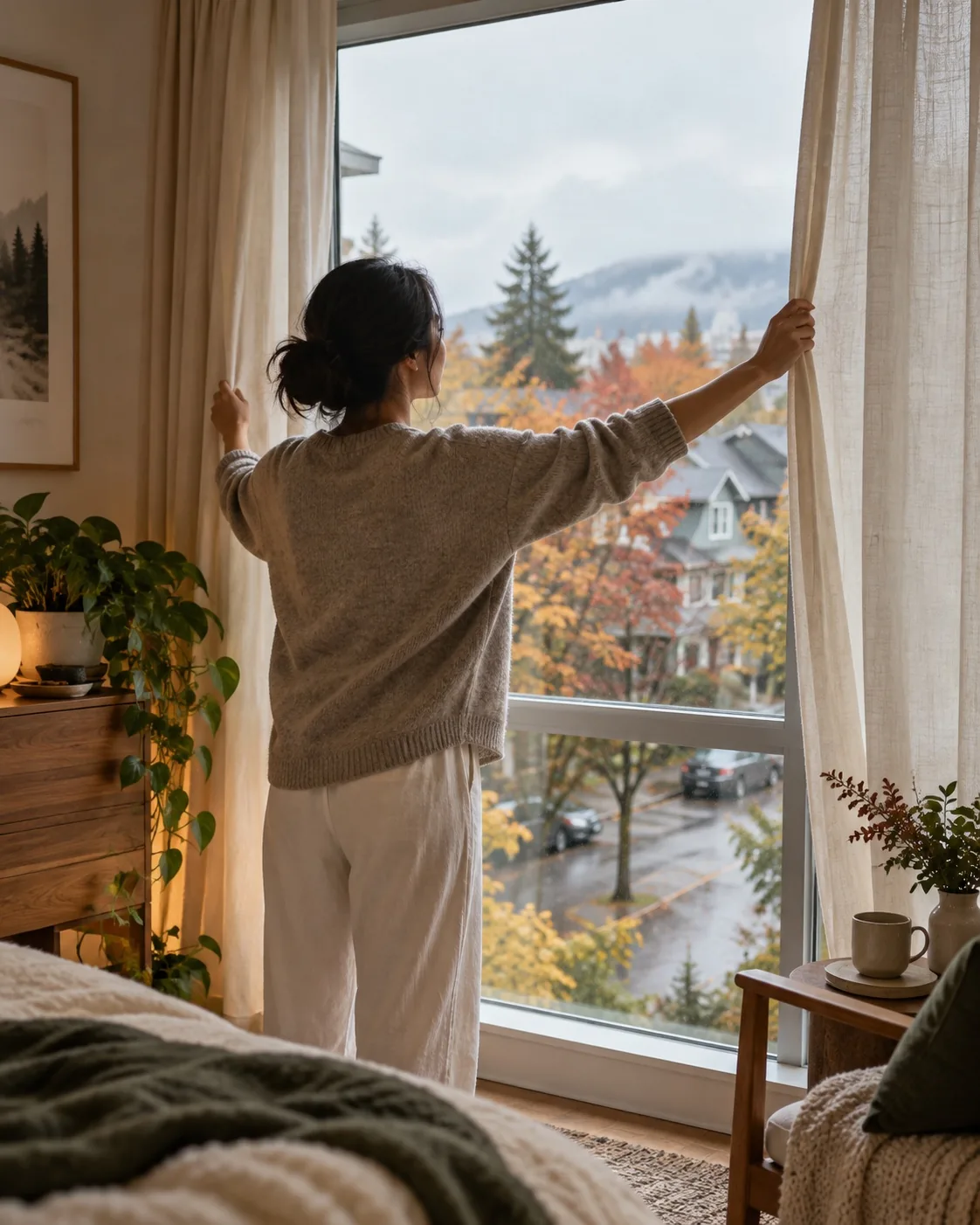
By October, mornings in Greater Vancouver are darker and the end of the workday comes closer to sunset. It can feel as though the day has barely begun before it is over. An autumn wellness routine does not have to start with supplements or a dramatic reset. It can start with a smaller choice: make a little room for daylight.
This does not mean that cloudy weather makes everyone unwell, or that every tired day has a single seasonal cause. Light, activity, social contact and routine can all shape how a day feels. Rather than calling yourself “lazy,” it may be more helpful to notice whether your daily rhythm has quietly changed.
Autumn care can begin with a little natural light, a short walk and a conversation with someone you care about.
Find a daylight window you can actually keep
Open the curtains in the morning or step outside briefly at lunch. You do not need to wait for a perfectly sunny day. Even an overcast break outdoors can give you a pause from work and a repeatable daytime ritual. A commuter might get off transit one stop early; someone working from home might put a lunchtime walk on the calendar.
This is not a treatment plan, and there is no need to set a strict number of minutes. A small arrangement that fits your life is often more sustainable than an ambitious routine that lasts only two days. The Centre for Addiction and Mental Health recommends seeking daylight during the shorter seasons while also staying active and connected to other people.
Do not feel you must endure persistent low mood alone
It is common to have an occasional day when going out feels difficult. But if low mood, fatigue, loss of interest, or changes in sleep or appetite persist and begin to affect work, study or relationships, contact a family doctor or a qualified mental-health professional. Seasonal affective disorder is a health condition that needs assessment. A lamp, a massage or a relaxation session should not be used to diagnose or manage it on your own.
A therapeutic light box is not the same as an ordinary desk lamp. If you have an eye condition, take medication that can increase light sensitivity, or are receiving treatment for a mood disorder, speak with your doctor before trying one. A walk in natural light and medical light therapy are different things.
Schedule relaxation before you feel you need rescuing
Some people enjoy a quiet cup of tea; others prefer a gentle walk after work or a bodywork session such as tuina. At SKY, we see these choices as possible parts of a steady routine, not a promise that one visit will restore everyone’s energy. Persistent pain, marked fatigue or emotional distress should be described to an appropriate health professional before you choose additional support.
One small experiment for this week: reserve a manageable window of daytime for several days, then notice your energy, sleep and willingness to be active. The notes are for understanding yourself, not for scoring your performance.
Make the routine yours
Apartment living and fixed work hours do not always leave room for a long morning outing. A loop around the block at lunch, a call near a window, or a daytime visit to a library, community centre or park on the weekend may fit better. The point is not to copy someone else’s morning routine; it is to find an opening that does not add another burden.
If it rains, choose appropriate clothing and a safe, level route. If going out is not practical, open the curtains, sit near natural light, do a light household task or simply stand and move for a moment. Missing a day is not a failure. Counting even a short window as worthwhile makes a habit more likely to last.
You can also bring connection into that window: shop with a family member, take a short walk with a neighbour or call a friend during the day. For some people, feeling less isolated matters just as much as the light. If changes persist and affect ordinary life, bring your observations to a professional rather than waiting until they feel “serious enough.”
This article offers general lifestyle information, not diagnosis or treatment. The cover is an AI-generated illustrative scene.