
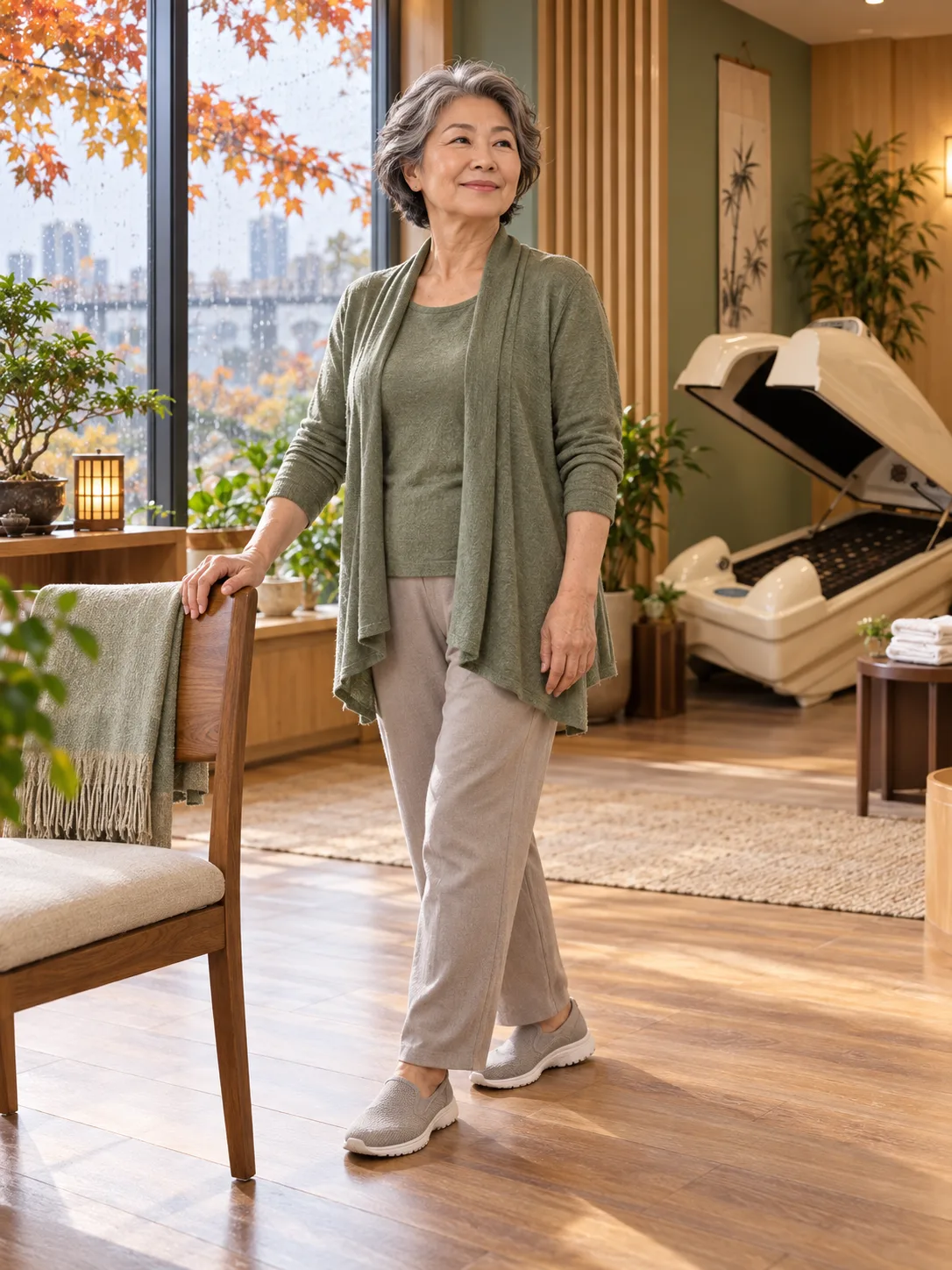
Autumn in Greater Vancouver rarely arrives all at once. It settles in through repeated rain, cooler mornings, shorter days and warmer indoor air. For older adults, seasonal wellness does not need to begin with a strong tonic or an elaborate routine. Three ordinary priorities are more useful: warmth, balance and movement.
Warmth means dressing in adjustable layers. Balance means reducing rainy-day fall risks. Movement means maintaining strength and mobility within your current ability. These habits are modest, but they are easier to sustain than any “one solution for everyone.”
Autumn wellness is not about forcing the body to sweat. It is about making everyday life safer and more consistent.
Dress in layers without overheating
A Vancouver autumn day may begin cold, warm up at noon and end inside a heated building. A breathable base layer, a warm middle layer and a rain-resistant outer layer make it easier to adapt. Remove a layer when you come indoors rather than staying bundled all day.
Cold hands or feet do not automatically mean the room should be very hot. Persistent chest pressure, shortness of breath, marked weakness, or one cold or discoloured limb needs appropriate medical assessment rather than heat or a wellness service alone.
Prevent slips before counting steps
Wet leaves, wooden walkways, metal covers and puddles can all be slippery. Shoes with visible tread and a stable heel are more practical than a light but smooth sole. Reflective details help when walking in darker mornings or evenings.
At home, check whether walking paths are clear, bathroom and stair rails are secure, the route to the bathroom is well lit, and entrance mats lie flat. Falls are not an inevitable part of aging; strength, balance and environmental changes can reduce risk.
Repeated dizziness, darkened vision on standing, a noticeably slower gait or a fall within the last six months should be discussed with a family doctor or pharmacist. Medication review may also be relevant.
Break movement into manageable pieces
Canadian public-health guidance recommends that adults 65 and older work toward at least 150 minutes of moderate-to-vigorous activity each week, alongside muscle, bone and balance activities. Someone returning to activity does not need to begin with a full hour.
A few supported heel raises, controlled sit-to-stands or a ten-minute walk after the rain stops can be a reasonable start. Build gradually. Stop and seek medical help for chest pain, fainting or unusual shortness of breath.
Warm food does not have to mean heavy supplementation
Congee, steamed egg, tofu, fish, cooked vegetables and whole grains can make comfortable autumn meals. The foundation is still variety across vegetables, fruit, whole grains and protein foods, eaten regularly.
Soup may feel warming, but sodium still matters. If appetite is low, smaller meals may be more realistic than forcing a large serving. Follow individual advice when a heart or kidney condition requires limits on fluid or particular foods.
Herbs and natural health products can interact with prescriptions. Older adults using anticoagulants, blood-pressure medicines, diabetes medicines or several medications should have herbs and supplements checked by a doctor, pharmacist or qualified TCM practitioner.
Energy Activation Pod: screen first
At Sky, the Energy Activation Pod is offered as a relaxation and everyday wellness experience. It is not a medical device and does not diagnose, treat, cure or prevent disease. Age alone does not determine suitability; health history, implanted devices, heat sensation and recent treatment matter more.
Do not proceed directly if you have a pacemaker, implanted defibrillator, cochlear implant or another programmable implant; metal implants or a joint replacement; a history of deep-vein thrombosis or a clotting disorder; recent surgery, chemotherapy or radiation; fever or acute infection; severe diabetic neuropathy or reduced heat sensation.
Alcohol use, dehydration, extreme exhaustion, epilepsy history or poorly controlled blood pressure also call for assessment first. A relaxation experience never replaces fall assessment, chronic-disease management or medical advice.
Common questions
Does every older adult need an autumn tonic?
No. Begin with appetite, weight changes, chronic conditions, medications and regular balanced meals. Check herb and supplement interactions before long-term use.
When should medical care come first?
Seek care for persistent loss of appetite, significant weight change, repeated falls, chest pain, breathing difficulty, altered awareness, or any sudden or severe symptom.
This week, consider checking the tread on rain shoes, clearing nighttime walking paths, scheduling one manageable period of movement each day, and making a complete medication and supplement list. Seeing risk clearly and making the ordinary day more stable is meaningful wellness in itself.