
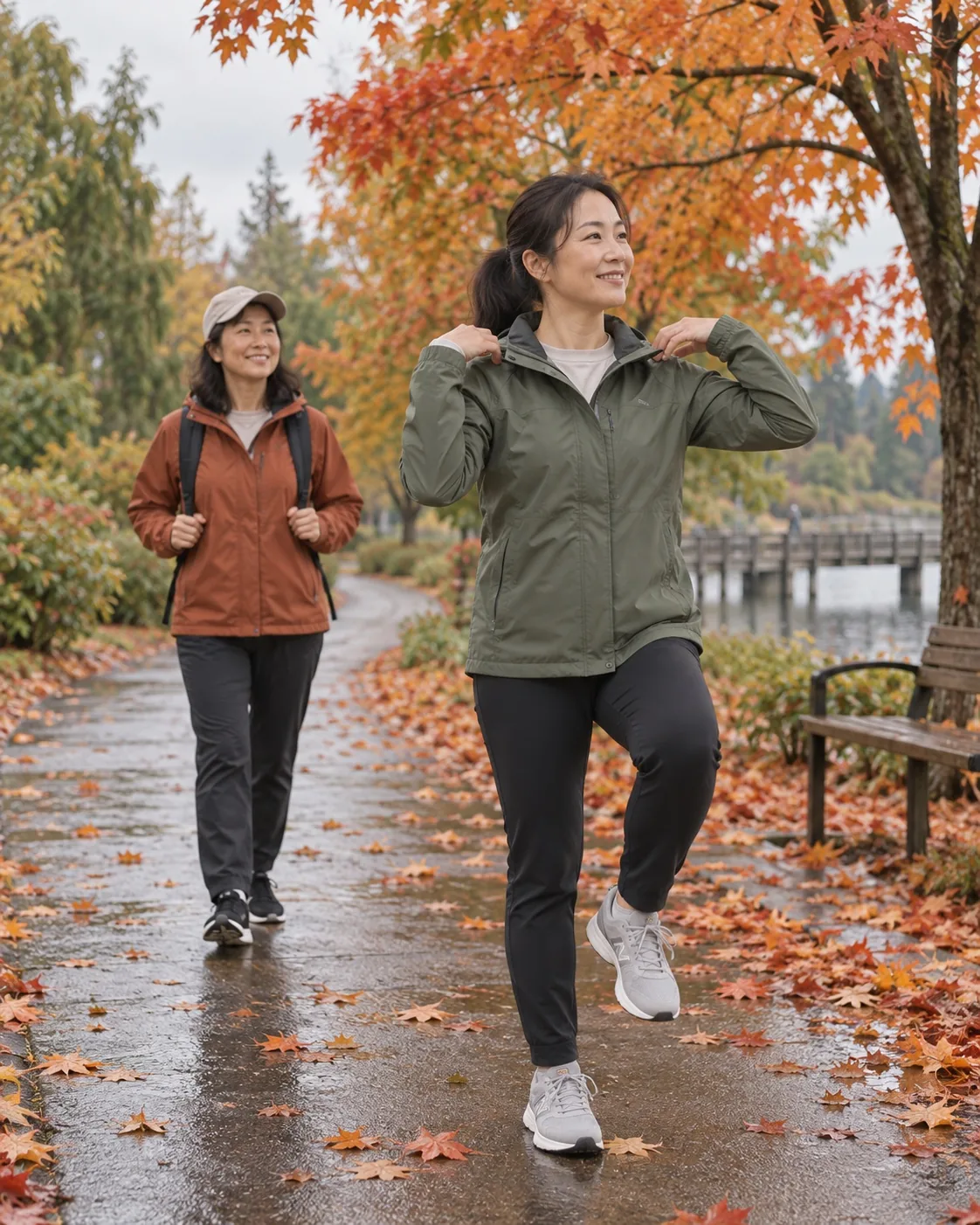
Autumn in Richmond changes more than the temperature. Mornings feel cool, afternoons can warm up, and park paths may be covered with wet leaves. If you want to keep walking, jogging or hiking on weekends, give your body a transition from indoors to outdoors instead of starting at full speed.
This is not about reaching a particular step count or sweating more. Focus on three parts: warm up, increase your effort gradually and ease down at the end.
A warm-up should not be painful stretching
The Public Health Agency of Canada recommends warming up for at least five minutes before physical activity. Before an ordinary walk, begin with easy steps indoors or near your doorway. Add gentle shoulder movements, marching in place and comfortable ankle circles. Once you feel ready, move toward your usual walking pace.
The movements should not cause pain, dizziness or breath-holding. If you have a previous injury, unstable joints, a heart or lung condition, or have not been active regularly for some time, ask a health professional what kind of activity is appropriate for you.
A simple order to remember: check the weather and ground → choose layers and shoes with good traction → start with easy walking and gentle movement → settle into your usual activity.
Build gradually and look closely at the path
A free weekend can make it tempting to double your usual activity all at once. Increasing time or intensity gradually is more manageable, particularly when you are tired. Choose a level, well-lit route when there are puddles, wet leaves or poor visibility. Shorten your stride and slow down where the surface is uncertain.
Cool weather does not remove the need for water. Change out of damp clothing after you finish. Dressing for autumn is about comfort and safety, not wrapping up until you are drenched in sweat.
Ease down before choosing how to relax
After a walk, do not stop abruptly and immediately sit in the car. Slow your pace, allow your breathing to settle, drink water and change wet clothes. Gentle stretching may be part of your routine, but soreness is not a measure of success.
If you are considering tuina, tell the practitioner about a recent change in exercise, old injuries, pain, swelling or numbness. A bodywork session may feel relaxing, but it is not a substitute for assessing an acute injury. A new sprain, marked swelling, severe pain or inability to bear weight calls for medical assessment rather than forceful massage.
Plan an outing you would want to repeat
Many of us sit for much of the week and then attempt a long trail on Saturday. Instead of aiming to be exhausted, pick a route whose distance, slope and return options you understand. Carry water and keep enough energy for the trip back. Finishing with the thought “I could do this again” is a useful sign that the plan was realistic.
Walking companions may have different abilities. Agree on a turnaround point rather than pushing one another. If you become unsteady, develop chest discomfort, feel very dizzy or have unusual breathing difficulty, stop and seek appropriate help. Adjustable layers are more practical than a single heavy coat that becomes too hot once you move.
At home, note what felt comfortable and what felt too demanding. The next outing can be adjusted accordingly. In everyday terms, balancing movement and rest means letting activity, recovery and quiet time fit together rather than forcing either one.
This is general activity-safety information, not an individual exercise prescription or medical advice. The cover is an AI-generated illustrative scene.