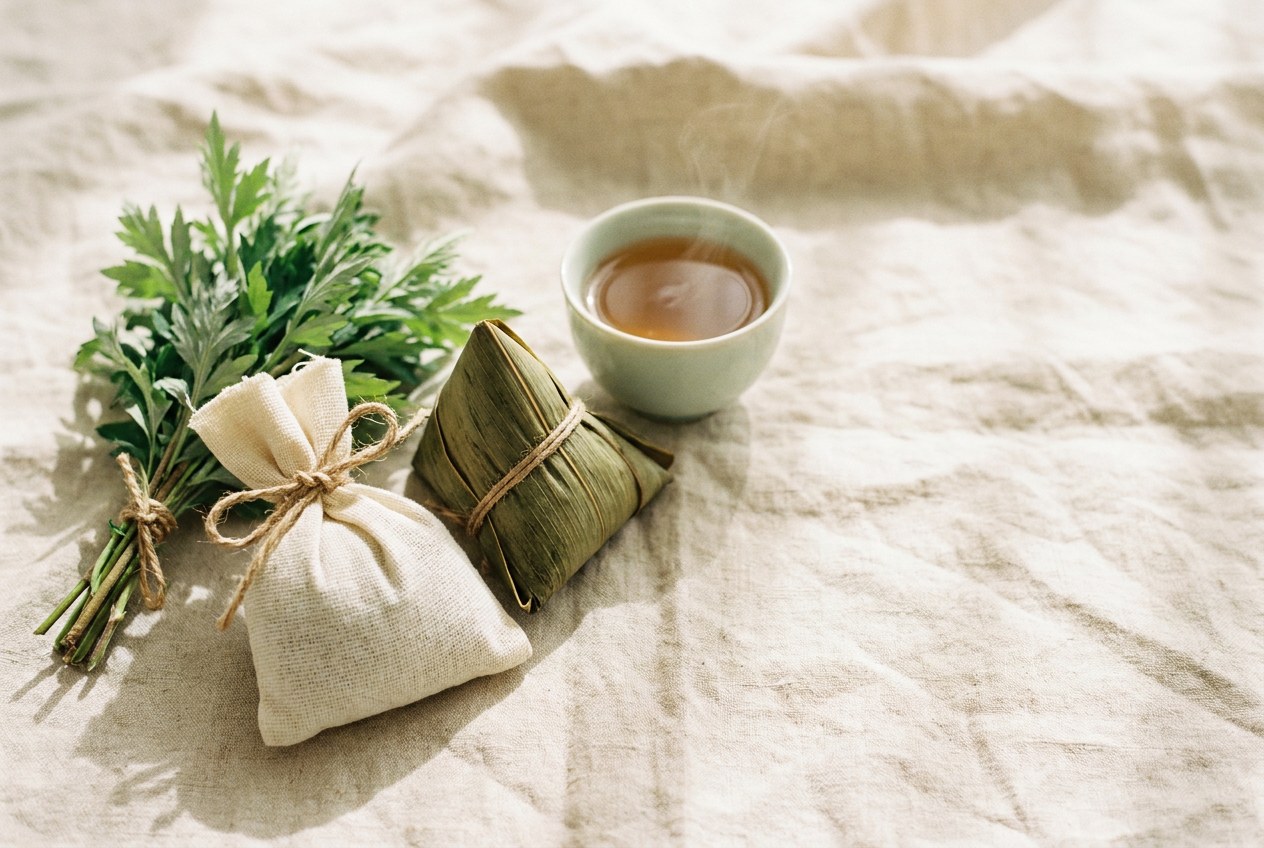
The smell usually arrives before the calendar does. Walk through a Richmond Asian grocery in early June and you catch it — bundles of fresh mugwort by the door, the sweet steam of zongzi (粽子) cooking somewhere, maybe a string of little herbal sachets in red and gold near the till. Dragon Boat Festival (端午节) is close, and with it comes a quiet kind of dragon boat festival wellness most of us walk right past. For many people the day lands as one thing: eat zongzi, watch a race, send a “端午安康” message, move on.
But look a little closer at the customs and something else shows up. This wellness side isn’t a modern add-on — it’s been folded into the holiday for centuries. 端午 sits at the turn into hot, damp summer, the time of year people once worried most about illness, and almost every tradition has a small piece of body-care tucked inside it. Here are four wellness wisdoms hidden in the customs, the kind worth keeping long after the zongzi are gone.
What is the wellness wisdom behind hanging mugwort and wearing sachets?
The first wisdom is the simplest: bring aromatic, air-clearing herbs into your space and onto your body. Hanging mugwort (艾草) and calamus over the door, and wearing little herbal sachets (香囊), are old early-summer customs — and underneath the folklore is real seasonal sense.
端午 marks the start of the hot, damp, buggy stretch of the year. In Chinese medicine, warm aromatic herbs are classic for moving stagnant, damp air and lifting a heavy room. Practically, the custom does three useful things:
- Freshens the air. Mugwort’s warm, slightly bitter scent cuts through the closed-up, humid feeling of early summer indoors.
- Marks a reset. Bringing fresh herbs into the home is a tidy little ritual of “new season, fresh start” — open the windows, clear the corners, change the air.
- Carries the calm with you. A sachet of dried herbs in your bag or on a child’s clothing keeps a soft, grounding scent close all day.
You don’t need to recreate the whole tradition. A small bundle of mugwort by the door, or a simple aromatic sachet, is a low-effort, nice-smelling nod to the custom. If you enjoy wearable, fragrant reminders to slow down, our piece on herbal bead bracelets follows the same idea — keeping a small calming scent within reach through the day.
How many zongzi should you actually eat?
Answer first: enjoy zongzi, but slowly and one at a time — glutinous rice (糯米) is genuinely hard to digest, so moderation is the whole wisdom here. “粽子好吃别贪多” is folk advice with a real spleen-stomach (脾胃) reason behind it.
Glutinous rice is sticky, dense, and slow to break down. Eat several in one sitting — especially cold, or late at night — and many people feel that familiar heavy, bloated, stuck feeling afterward. In TCM, the spleen-stomach governs digestion, and a sticky, heavy load is exactly what overwhelms it. A few simple ways to enjoy zongzi well:
- One at a time. Treat a zongzi as a small meal, not a snack you stack three-high.
- Eat it warm. Warm food is gentler on the spleen-stomach than cold, dense rice straight from the fridge.
- Pair it with warm tea. A pot of warm tea — plain green, or something with chenpi (陈皮, dried tangerine peel) — helps the meal sit more comfortably.
- Slow down. Sticky food eaten in a rush is harder on digestion than the same food eaten calmly.
A note of honesty and caution: zongzi are heavy and starchy. People with diabetes, reflux, a weak spleen-stomach, or any swallowing difficulty should be especially careful, and children should eat small portions slowly. If you have ongoing digestive or blood-sugar concerns, this is a check-with-your-practitioner matter, not a “push through it” one.
How does Dragon Boat Festival wellness ease you into summer?
The third wisdom: treat 端午 as a natural checkpoint to shift your daily rhythm into summer mode. The festival lands in early summer — days are long, and heat and damp (湿) are both on the rise — which makes it a tidy moment to adjust habits before the hottest months arrive. This is where dragon boat festival wellness becomes practical rather than symbolic.
A gentle summer reset, TCM-style:
- Rise a little earlier. Long daylight is the season’s cue to get up earlier and use the cooler morning hours.
- Take a short midday nap. Even 20–30 minutes of midday rest suits summer’s rhythm and protects your afternoon energy.
- Avoid the cold traps. This is the season of iced drinks and strong air-conditioning. Both feel great for a minute and chill the body in a way that, in TCM, burdens the spleen-stomach and invites damp. Favour cool-but-not-icy drinks and don’t sit directly under the AC vent.
- Mind the damp. Early-summer Richmond can turn humid fast. Keep moving, eat lightly, and don’t let yourself stay in sweaty, damp clothes.
If that heavy, sluggish, damp feeling is already familiar to you in our wet local climate, our deeper guide to clearing damp in Vancouver carries straight over into summer — the foods and habits are much the same.
Why does keeping a small personal ritual matter?
The fourth wisdom is the quietest and maybe the most useful: keep one small personal ritual, because slowing down on purpose is itself good medicine. “给自己留个仪式” — give yourself a ritual — is what turns a festival from a date on the phone into a moment that actually lands.
It doesn’t need to be elaborate. The point is a small, deliberate pause:
- Make a tea egg (茶叶蛋) and let the kitchen smell of star anise and soy for an afternoon.
- Brew a proper pot of tea and drink it sitting down, not standing at the counter checking messages.
- Steam a couple of zongzi the slow way and share them warm with family.
- Step outside for ten unhurried minutes if there’s a dragon boat race or a riverside walk nearby.
In Chinese medicine, the body and the mind aren’t treated as separate systems — chronic rush and tension show up physically, and a genuine pause helps settle them. A festival is a built-in, guilt-free excuse to take one. That’s the real “wellness” in dragon boat festival wellness: not a supplement or a special food, but permission to slow down for a day.
When is heaviness after a festival something to look at?
Most post-festival heaviness is ordinary — too much rich, sticky food, and it passes in a day or two. But a few patterns are worth more attention. Consider seeing a practitioner if:
- Bloating, reflux, or a heavy stuck feeling lasts well beyond the holiday.
- You regularly feel weighed-down, foggy, and tired through the damp summer months.
- Digestion has shifted noticeably — ongoing loose stools, poor appetite, or discomfort after normal meals.
- Blood-sugar or digestive concerns make festival foods a real worry rather than a treat.
Significant or persistent symptoms always deserve a proper look from a doctor or registered TCM practitioner — not a wait-and-see. Good seasonal wellness is a partnership: the small festival habits at home, and professional support when the pattern runs deeper than one heavy meal. You can read about our approach at our Richmond TCM clinic, where season-change and digestion are among the most common reasons people come in.
端午安康 — and may your summer start light. Sky TCM Acupuncture & Wellness — Dr. Judy Chu, R.Ac is in Richmond at 3779 Sexsmith Rd, Unit 1138 (Continental Centre), Richmond, BC. Call 778-681-8886 to book a seasonal tune-up consultation. Mandarin · Cantonese · English.