It’s 3 p.m. You slept eight hours, you didn’t do anything strenuous, yet you feel like a phone stuck at 12% battery. Climbing the SkyTrain steps leaves you a little breathless. Your voice trails off by the end of a sentence. Coffee gives you twenty minutes, then drops you lower than before. If “always tired” has become your normal, it may not be laziness or bad sleep — across Vancouver and Richmond, this is one of the most common complaints walking into a TCM clinic, and in Traditional Chinese Medicine the pattern of qi deficiency tired days like this often points to one thing: qi deficiency (气虚).
What is qi deficiency, and why does it make you tired?
Qi deficiency is a shortage of the body’s basic functional energy — the “qi” that powers digestion, circulation, warmth, and the ability to bounce back. When qi runs low, everything works at a discount: less stamina, weaker digestion, lower resistance to colds. That’s why qi-deficiency tiredness is a tiredness that rest doesn’t fully fix. You wake up already running on empty.
In TCM, much of your daily qi is generated by the spleen-stomach (脾胃) — the digestive system’s job of turning food into usable energy. If that system is overworked by cold drinks, skipped meals, constant stress, or simply too many years of pushing through, qi production falls behind demand. The tank never fully refills.
What are the signs of qi deficiency tired days?
The clearest sign is fatigue that gets worse with exertion and isn’t cured by sleep — the hallmark of feeling qi deficiency tired. Around that, a recognizable cluster tends to appear:
- Tiredness after light effort — stairs, a short walk, or a long conversation feel disproportionately draining
- Breathlessness and a quiet voice — you run out of air mid-sentence
- Sweating easily, even without much activity
- Frequent colds or slow recovery from them
- Poor appetite, bloating, or loose stools after meals
- Feeling worse as the day goes on, especially in the afternoon
- Pale complexion and a tongue that looks pale with a thin coating
You don’t need every item. If three or four feel familiar and have lasted weeks rather than days, qi deficiency is worth considering.
Is “always tired” always qi deficiency?
No — and this matters. Persistent fatigue is also a symptom of anemia, low thyroid, iron or B12 deficiency, sleep apnea, diabetes, and depression. None of those are things to guess about at home. If your tiredness is new, severe, or comes with weight loss, chest symptoms, or low mood, see your family doctor first to rule out a medical cause. TCM works best alongside that check, not instead of it. A registered TCM practitioner can then assess whether qi deficiency — and which organ system — is part of your picture.
How do you rebuild qi through food?
Warm, cooked, easy-to-digest food is the foundation, because it asks less of the spleen-stomach and gives more back. The principle is simple: feed the system that makes your energy, and stop draining it.
| Helps build qi | Tends to drain qi |
|---|---|
| Congee, millet, oats | Iced and cold drinks |
| Sweet potato, pumpkin, squash | Raw salads in large amounts |
| Chicken or beef in soups | Sugary snacks and desserts |
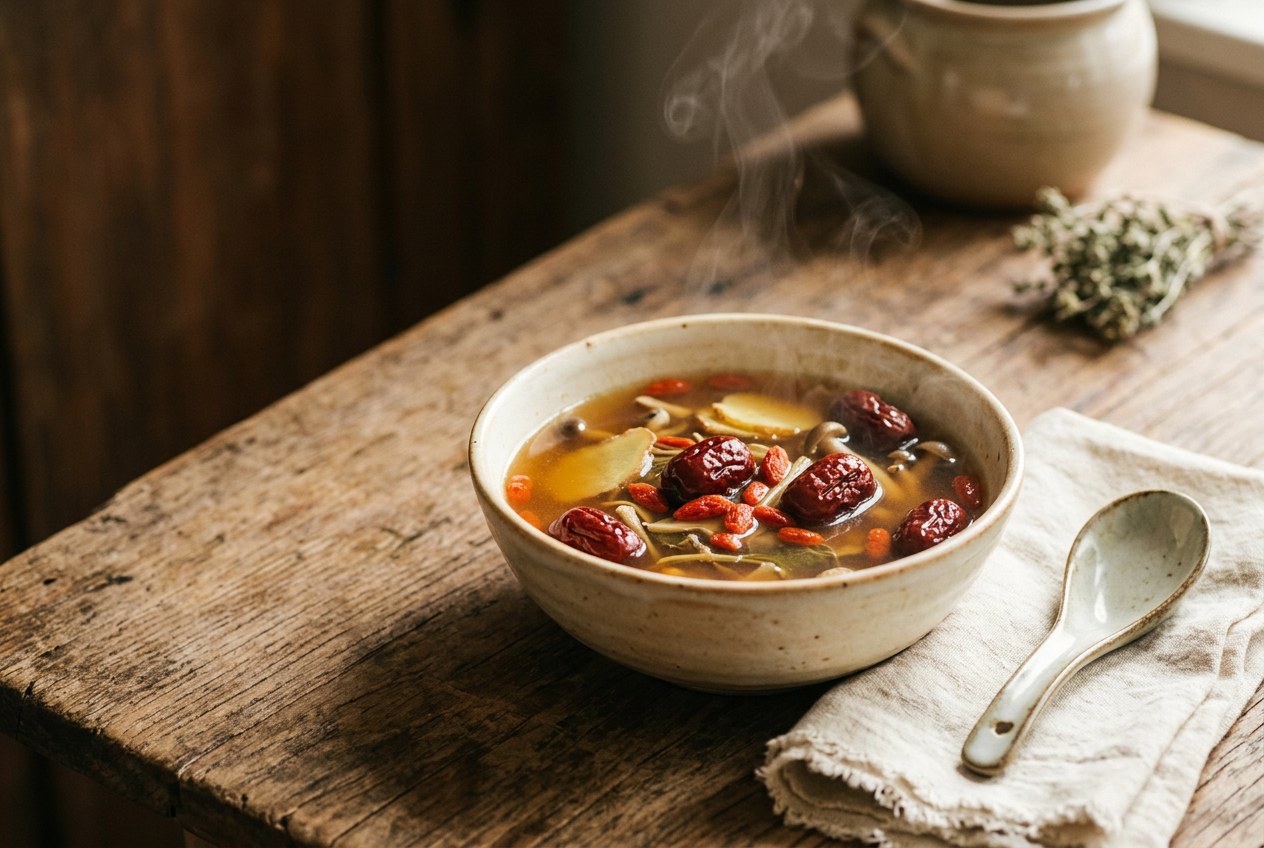
| Red dates, goji berries | Skipping breakfast |
| Ginger, small amounts | Eating very late at night |
A few everyday habits matter more than any single “superfood”: eat a real breakfast, take drinks at room temperature or warm, chew slowly, and don’t eat your biggest meal at 10 p.m. A note of caution: warming, tonifying foods aren’t for everyone. If you tend to run hot — red face, mouth ulcers, constipation — pile on too much ginger and date tea and you may feel worse. And tonifying herbs are not the same as food; if you are pregnant, on medication, or managing a chronic condition, don’t self-prescribe herbs. Have a registered TCM practitioner in Richmond tailor them.
How do rest and daily rhythm help?
Qi rebuilds during rest, so the most underrated “tonic” is a consistent sleep schedule. Going to bed before 11 p.m. and waking at a regular time lets the body do its repair work on schedule. Two more low-effort habits help:
- Move gently, don’t grind. Exhausting workouts can deepen qi deficiency. Walking, gentle stretching, tai chi, or qigong build energy without burning the reserves you’re trying to refill.
- Pace your day. Short breaks before you crash beat one collapse at 3 p.m. Step away from the screen, breathe, and unclench your shoulders.
The goal isn’t to do more — it’s to stop the slow leaks that empty your tank faster than you can fill it.
When should you see a professional?
See a registered TCM practitioner when self-care hasn’t moved the needle after a few weeks, or when the tiredness is interfering with work and daily life. In TCM, qi deficiency is treated by supporting the spleen-stomach and steadying overall energy — and several tools can help. Many people in Richmond find that a course of acupuncture, paired with simple diet and sleep changes, brings steadier energy over a few weeks. Acupuncture is generally well tolerated, but it isn’t a quick fix or a substitute for medical care — results vary from person to person.
For those who want a deeply restful reset, the Energy Activation Pod offers a warm, calming session that many describe as recharging on days when fatigue is heavy. Think of it as one supportive option within a broader plan — food, rest, and professional assessment still do the heavy lifting.
Frequently asked questions
What does qi deficiency feel like?
Qi deficiency feels like a tiredness that rest doesn’t fix: low energy, breathlessness on light effort, a soft voice, easy sweating, and feeling worse as the day goes on.
Is being always tired the same as qi deficiency?
Not always. Persistent fatigue can come from anemia, thyroid issues, sleep apnea, or depression. See a doctor to rule those out; a registered TCM practitioner can then assess qi.
What foods help rebuild qi?
Warm, cooked, easy-to-digest foods help most: congee, millet, sweet potato, pumpkin, oats, dates, and small amounts of ginger. Cold, raw, and sugary foods tend to drain qi.
Can acupuncture help with tiredness from qi deficiency?
Many people report steadier energy after a course of acupuncture aimed at the spleen-stomach and a regular sleep routine. Results vary; a registered TCM practitioner should assess you first.
Who should be cautious with qi-tonifying foods and herbs?
If you are pregnant, managing a chronic illness, or taking medication, check with a doctor or registered TCM practitioner before using tonifying herbs. Self-dosing herbs is not advised.
Tired of being tired? At Sky TCM Acupuncture & Wellness in Richmond, registered TCM practitioner Dr. Judy Chu (R.Ac) can assess whether qi deficiency is behind your fatigue and build a plan around acupuncture, diet, and rest. Visit us at 3779 Sexsmith Rd, Unit 1138, Richmond, BC, or call 778-681-8886 to book.