“Isn’t this just a massage?” At Sky TCM Acupuncture Clinic, it is the question we get most, and behind it sits the old puzzle of tuina vs massage. On the surface, both are hands working on the body. But notice one thing: before tuina, we take your pulse, look at your tongue, and ask how long the trouble has been there; before an ordinary spa massage, you usually just lie down and relax. That single step, the assessment first, is the heart of what separates the two.
Tuina vs massage: different jobs
Let us be clear up front. We respect ordinary massage. It is genuinely valuable for relaxing, easing stress, and improving sleep. Worth adding, too: Registered Massage Therapy (RMT) is a regulated health profession in BC; what we contrast here is the relaxation-style spa massage. This is not a question of one being better than the other, only of different goals:
- Massage: aimed mainly at relaxation and comfort. Rub where it is sore, let you unwind in the moment. It is a fine way to rest.
- Tuina (推拿): a Chinese medicine therapy. It works through pattern differentiation (辨证) and point selection, along the line of the meridian (经络), through fascial and point layers, to open the channels, regulate qi and blood (气血), and ease specific soreness and stiffness.
Put simply: massage is after comfort, tuina is after the pattern. One relaxes you; the other carries a Chinese medicine read into the work.
What tuina adds on top
In practice, the difference between tuina and massage shows up here:
- Assessment before hands: tuina reads your constitution, which channel the problem belongs to, whether it is full or depleted, and chooses technique from there
- Working the channels and points: not just rubbing where it hurts, but along the meridians and points with purpose
- A system of technique: kneading, rolling, pressing, plucking, and mobilizing each have a clear aim and layer
- Credentials: at Sky TCM, tuina is delivered by a trained team working from a CTCMA-registered practitioner’s assessment
- Often paired with other therapies: it can go with acupuncture, bone-setting and sinew-release (正骨), and herbs
Ordinary massage usually does not include this layer of pattern differentiation and channel-based point selection.
How Dr. Judy sees it
Dr. Judy Chu, R.Ac is a Chinese medicine practitioner registered with the CTCMA of BC. She often says the biggest difference between tuina and massage is not in the hands but in the judgment before the hands go down. A tight shoulder can be plain desk strain in one person, blocked qi and blood in another, even tied to the neck in a third. A massage might rub all of them the same way; tuina has to sort them out first, then decide where to work, which technique to use, and whether to bring in acupuncture.
At Sky TCM, this is exactly the split: Dr. Judy does the Chinese medicine assessment, the trained team carries out the hands-on work, so the judgment and the doing each go to the right person.
When to choose tuina, when to choose massage
- Want to purely relax, ease stress, sleep well: an ordinary massage suits you well
- Have specific soreness, stiffness, or restricted movement to address: tuina fits the pattern better
- Not sure where the problem is and want someone to read it first: choose tuina with a Chinese medicine assessment
- Want to pair it with acupuncture: see acupuncture and tuina together
To understand the thinking behind meridian work, see Vancouver meridian tuina; for pain relief, see tuina for neck and back pain. If you are weighing acupuncture instead, see acupuncture in Richmond.
Clinic location and hours
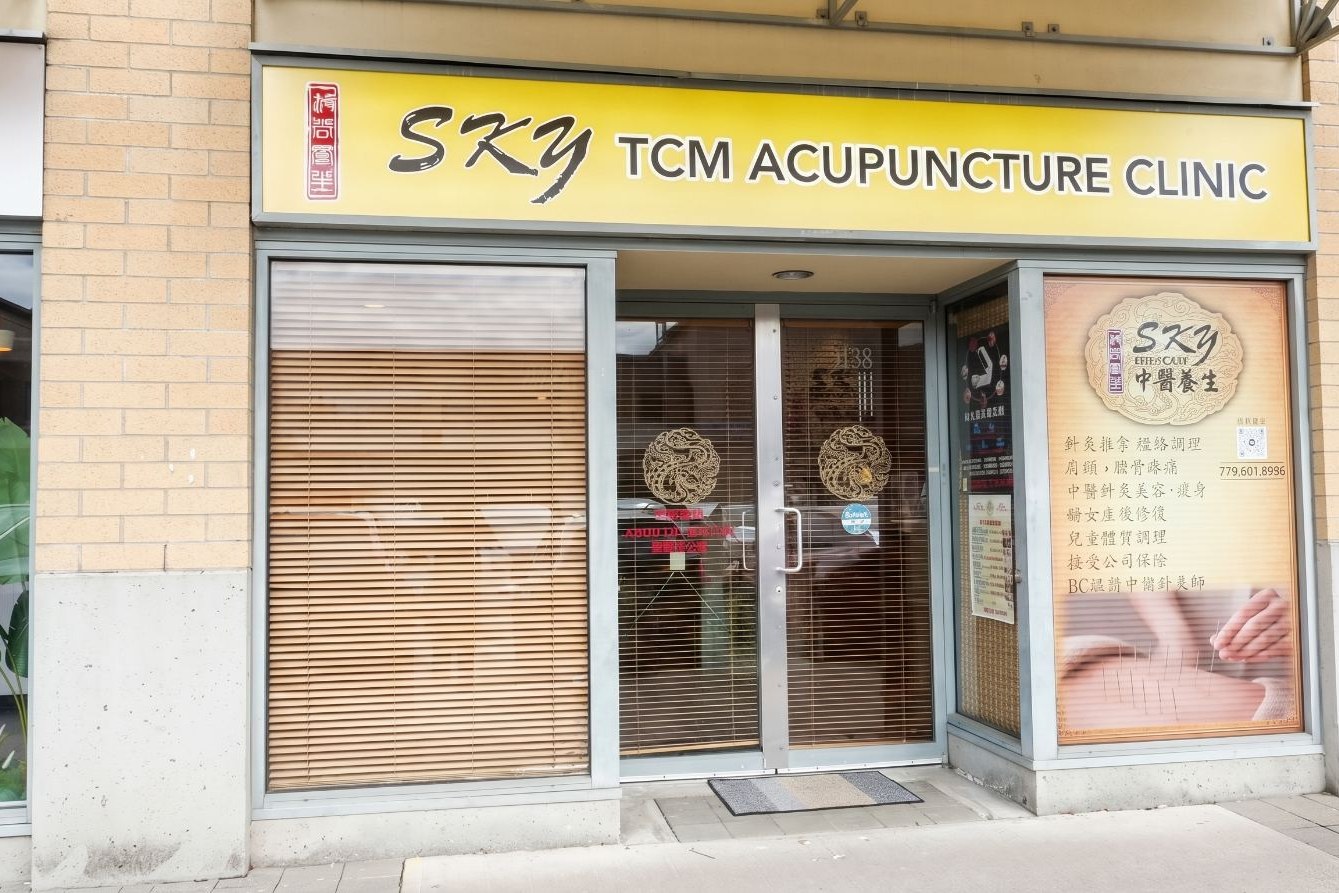
3779 Sexsmith Rd, Unit 1138, Richmond BC V6X 3Y6
Continental Centre
778-681-8886
Daily 10AM–6PM, by appointment
Walkable from Aberdeen Station on the Canada Line, with parking at Continental Centre.
Tuina vs massage FAQ
Is tuina just a firmer massage?
No. The difference is not about how much pressure, but whether there is a Chinese medicine read behind it. Tuina assesses the pattern and selects points along the channels with the goal of working the problem; pressure itself varies by person, set to be effective and comfortable.
So is tuina always better than massage?
We would not put it that way. The goals differ: if you want to relax and de-stress, massage is great; if you want specific soreness and stiffness worked on, tuina fits the pattern better. It comes down to what you need that day.
Do I need an assessment before tuina?
Yes. Dr. Judy does a Chinese medicine assessment first, reading your constitution and where the problem sits, and the team then applies the matching technique. That step is exactly what sets tuina apart from an ordinary massage.
Who carries out your tuina?
A trained bodywork team, working from Dr. Judy Chu, R.Ac’s Chinese medicine assessment. Where needed, it can be paired with acupuncture or bone-setting and sinew-release.
I only want to relax. Can I still come?
Of course. We arrange the technique to your goal. If you just want to unwind, you are welcome; if you want something more targeted, we will assess that for you too.
Book a tuina session
Not sure whether you want tuina or a massage? An assessment is the most direct way to tell. Dr. Judy reads which category your problem falls into first, then suggests the approach that suits.
Dr. Judy Chu, R.Ac at Sky TCM
3779 Sexsmith Rd Unit 1138, Richmond BC · 778-681-8886 · Daily 10AM–6PM
Book a consultation · About Dr. Judy · Our treatments